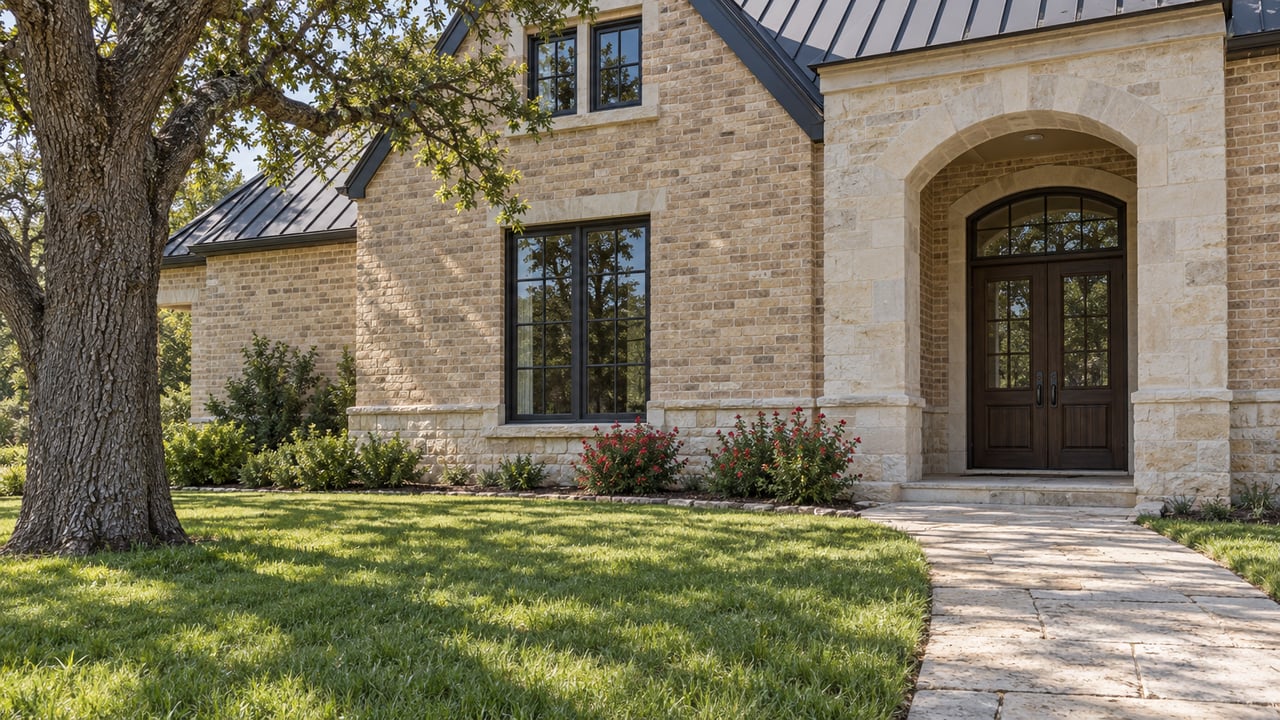
Property taxes on Grey Forest homes bring in $68,619 for the 2026-27 budget year, according to the city's published budget report. That is less than the city expects from court fines, warrants and bonds ($93,000) and less than its sales tax ($76,000). Most of the budget comes from a single line labeled "GFU Revenue," worth $1,137,127.12 out of $1,428,232.12 in total revenue. That works out to about 80 cents of every budgeted dollar.
GFU is Grey Forest Utilities, the natural gas system the city owns. If you are comparing Grey Forest with Helotes or northwest San Antonio, this arrangement explains the unusually small city line on a Grey Forest tax bill. It also shows that line is one of the smaller variables in what you will actually pay.
A utility much bigger than the town that owns it
Grey Forest Utilities says it serves more than 18,000 customers. Its territory runs from Highway 90 near Loop 410 to IH-10 and Loop 1604, then north along IH-10 to Boerne. It covers Alamo Ranch, Leon Valley, the Medical Center, Helotes, Fair Oaks Ranch, Boerne and The Dominion. In its April 2026 report, S&P Global Ratings counted 18,353 gas customer accounts at the end of 2024. Residential customers produced 74% of retail gas revenue.
The city itself is far smaller. Its budget report puts free residential trash pickup at about $234 per residence and nearly $59,000 a year in total, which works out to roughly 250 households. So a few hundred homes inside the city limits sit on top of a gas system that serves thousands of households across northwest Bexar County and up the I-10 corridor. Those gas customers are effectively paying for most of what Grey Forest's government does.
What the gas money buys inside the city limits
The city spells out the arrangement in its own budget document:
"One of Grey Forest's most distinctive advantages is its city-owned municipal utility, which provides a stable source of revenue and allows the City to preserve its small-town character without relying on commercial development to fund essential services."
The same 2026-27 budget report says the city receives about $1 million a year from GFU and that almost three-quarters of it goes directly to citizen benefits. It lists those services and what they are worth:
- Police services with no separate service charge, which the city describes as more than $400,000 a year in public safety spending
- Public works, including free brush chipping, road maintenance and fallen-tree removal, valued at over $260,000 a year
- Trash and recycling at no direct charge, plus bulk-item pickup twice a year, with annual cost increases of 5 to 6 percent absorbed in the city budget
- The Bexar County Emergency Services District tax, which the city pays on residents' behalf. The city puts that at nearly $95,500 a year, or about $380 to $390 per household
The last item matters most when you compare tax bills. An ESD charge that would show up as its own cost elsewhere is covered here by the city, and the money comes from gas customers.
Why the rate barely moves
Grey Forest's budget cover page for 2026-27 lists an adopted rate of $0.074272 per $100 of value, up from $0.073063 in 2025-26. Both years, the adopted rate equals the no-new-revenue rate. That is the rate that raises about the same property tax revenue from the same properties as the year before. The cover page also says the budget raises $647 less from property taxes than last year, a 0.93% decrease, and that $0 comes from new property added to the tax roll. Grey Forest carries no debt secured by property taxes.
The same cover page lists a voter-approval rate of $0.105302, well above the adopted rate. The council stayed at the lower figure. When property taxes make up about a twentieth of revenue, raising the rate barely changes the budget, so the city has no budget pressure pushing it to raise rates. In a city with no new construction adding to the roll, what holds the rate down is how much money the gas system sends over.
Here is how Grey Forest's city rate compares with its neighbors for the current budget year, applied to a $350,000 taxable value before any exemptions:
| City | Adopted rate per $100 | City portion on $350,000 |
|---|---|---|
| Grey Forest, 2026-27 | $0.074272 | about $260 |
| Helotes, 2026 | $0.310000 | about $1,085 |
| San Antonio, FY 2027 | $0.56288 | about $1,970 |
Helotes adopted its rate in its September 2026 budget, and the City of San Antonio publishes its FY 2027 rate summary online. Grey Forest's own budget report estimated savings of about $1,610 a year compared with San Antonio and $805 compared with Helotes for an average $350,000 home. That estimate was based on the 2025 rate.
The rest of the bill doesn't belong to the city
A Grey Forest property is taxed by more than one government. Bexar County, University Health, Alamo Colleges, the San Antonio River Authority, the school district and other units each levy their own rate, and the city's gas revenue doesn't reduce any of them.
The Bexar Appraisal District's rate chart, dated December 5, 2025, lists these 2025 actual rates: Bexar County at $0.276331, Bexar County Road & Flood at $0.023668, and the San Antonio River Authority at $0.018300 per $100. University Health adopted $0.276235 for 2025. Northside ISD's 2025 adopted rate was $1.004900. For 2026, Alamo Colleges announced an adopted rate of $0.166650, up from $0.149150. Several of the other 2026 rates were still proposals in the notices published this fall. The Northside ISD figure of $1.034900, for example, was published as a proposed rate.
Set those numbers side by side and the city's $0.074272 is one of the smallest lines on the bill. These other units also cover neighboring addresses outside Grey Forest, so for those lines the comparison between Grey Forest and its neighbors comes out close to even. Grey Forest's real difference is the city line plus the ESD charge the city covers. That is meaningful money, roughly the figures in the table above. It does not make the overall bill "low." It makes one part of it small.
The real variable is a gas system
Because the city depends on GFU, a buyer here has a reason to follow the utility's finances.
On April 17, 2026, S&P Global Ratings raised GFU's gas system revenue debt rating to A- from BBB+, with a stable outlook. S&P pointed to sustained fixed-charge coverage, a stable and expanding customer base, and a layered fixed-price strategy for buying gas that the utility has used since 2023. It also named two weaknesses: thin liquidity and exposure to natural gas price swings, especially during extreme temperatures. S&P said it does not expect to raise the rating again within its two-year outlook because liquidity is thin compared with peer utilities.
The upgrade came before a new bond issue. The final official statement covers $24,085,000 in 2026 gas system revenue bonds. The proceeds go toward acquiring, building, extending and repairing the gas system, and the bonds are paid from the system's net revenues, not from taxes. S&P said the money would pay for expansion in long-term high-growth areas and for improvements to the existing system. It put GFU's outstanding debt at about $13.5 million at the end of fiscal 2025.
Put another way, the budget that keeps Grey Forest's tax line small depends on customer growth in places like Alamo Ranch and along I-10 toward Boerne, and on how well the utility manages its gas costs. GFU's rate adjustment page explains that gas cost charges change monthly to pass through actual costs, and that the base rate gets an annual CPI adjustment approved by City Council. City Council governs both the utility's rates and the city's budget. The budget report says the GFU transfer rose from $1,082,978.21 in 2025-26 to $1,137,127.12 in 2026-27, while property tax revenue dropped slightly.
Before you compare two addresses
- Check whether the address is inside city limits. GFU's service area extends well beyond Grey Forest. A gas bill from GFU doesn't mean the home is in the city or gets the services the city pays for.
- Compare complete bills. Use the property's own truth-in-taxation figures for the 2026 tax year, not a city rate alone. Units that haven't finalized their 2026 rates will change the totals.
- Ask how the ESD line appears. The city says it covers the ESD portion for residents. Confirm how that shows up for the specific property you're considering.
- Read the budget alongside the utility's rating. Grey Forest's 2026-27 ordinance adopting the budget and S&P's outlook together tell you more about where the city rate is headed than any single year's rate does.
This post is general information about published rates and budgets, not tax, legal or financial advice. Please confirm the figures for your own property with the Bexar Appraisal District, the tax office or your own tax professional.
When a Grey Forest home goes to market, the tax story is part of its value, and it should be presented accurately, with the city line shown in proportion to the full bill. Leslie Brown can walk you through what that line means for a specific Grey Forest address. Request a Free Home Valuation to start.